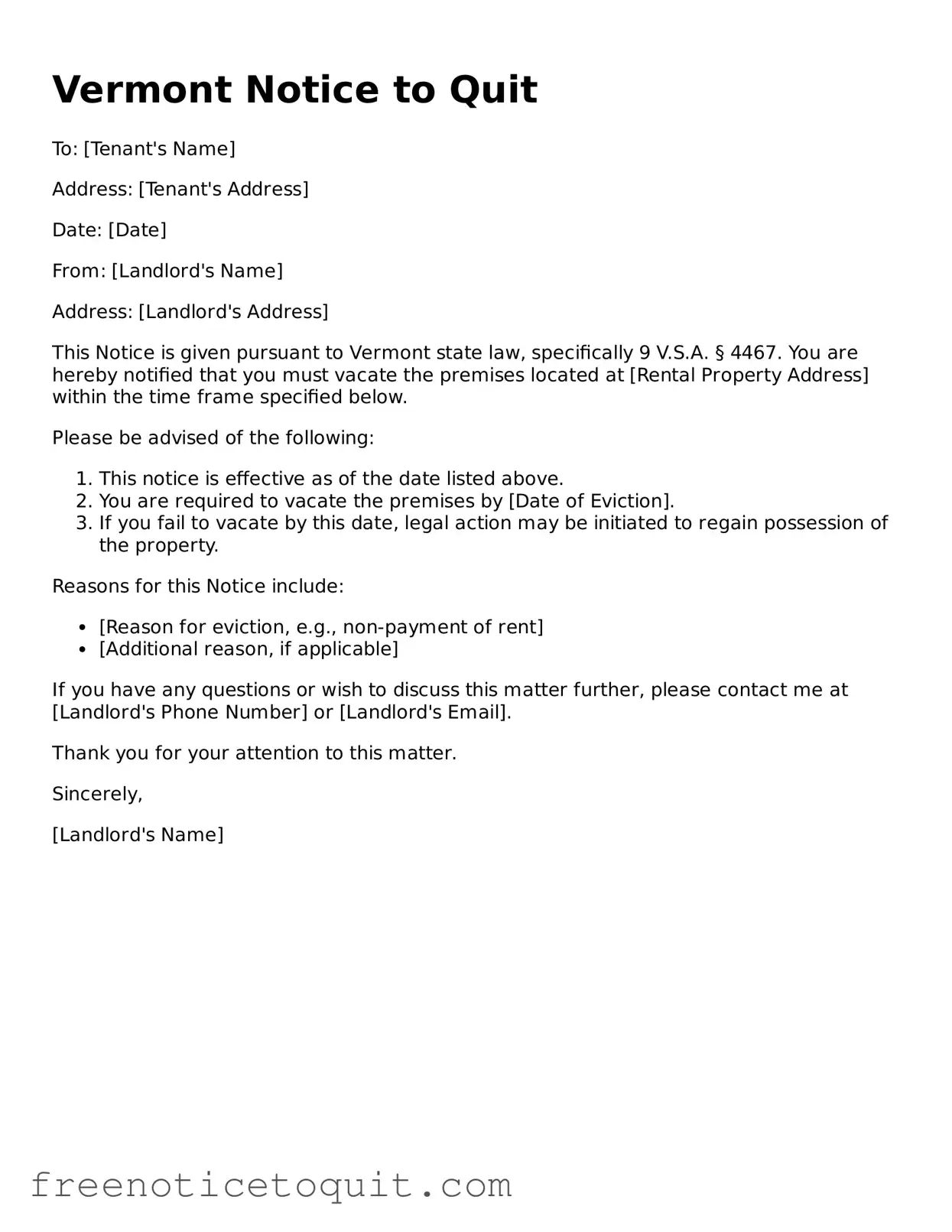
What is a Vermont Notice to Quit form?
The Vermont Notice to Quit form is a legal document that a landlord uses to inform a tenant that they must vacate the rental property. This notice is typically used when a tenant has violated the lease agreement or has not paid rent. It serves as a formal way to begin the eviction process, should it become necessary.
When should a landlord use a Notice to Quit?
A landlord should use a Notice to Quit when a tenant fails to pay rent, violates terms of the lease, or engages in illegal activities on the property. The notice provides the tenant with a chance to remedy the situation or vacate the premises before further legal action is taken.
How much notice must be given in Vermont?
In Vermont, the amount of notice required depends on the reason for the eviction. For non-payment of rent, landlords must provide a 14-day notice. For lease violations, a 30-day notice is typically required. It's essential to follow these timelines to ensure the notice is valid.
Can a tenant contest a Notice to Quit?
Yes, a tenant can contest a Notice to Quit. If they believe the notice is unjust or the reasons for eviction are unfounded, they can respond to the notice. This may involve communicating with the landlord or seeking legal advice to understand their rights and options.
What happens if a tenant does not leave after receiving a Notice to Quit?
If a tenant does not vacate the property after the notice period expires, the landlord may proceed with eviction. This typically involves filing a lawsuit in the local court. The court will then decide whether to grant the eviction based on the circumstances.
Is a Notice to Quit the same as an eviction notice?
While a Notice to Quit is often the first step in the eviction process, it is not the same as an eviction notice. The Notice to Quit informs the tenant to leave, while an eviction notice is issued after legal proceedings have taken place, officially removing the tenant from the property.
Does a Notice to Quit need to be in writing?
Yes, a Notice to Quit must be in writing to be legally valid in Vermont. This written notice should include the reason for eviction, the date by which the tenant must leave, and any other relevant details. Having a written record helps protect both the landlord and tenant.
What should be included in a Vermont Notice to Quit?
A Vermont Notice to Quit should clearly state the tenant's name, the address of the rental property, the reason for the notice, and the deadline for vacating the premises. It should also include the landlord's contact information and any other pertinent details that clarify the situation.
Can a landlord give a Notice to Quit for any reason?
No, a landlord cannot give a Notice to Quit for any reason. The notice must be based on legitimate grounds, such as non-payment of rent or lease violations. Landlords must adhere to Vermont's laws regarding tenant rights and eviction procedures to avoid legal repercussions.
What should tenants do upon receiving a Notice to Quit?
Upon receiving a Notice to Quit, tenants should carefully read the document and understand the reasons for the notice. They should consider their options, which may include paying overdue rent, addressing lease violations, or seeking legal advice to discuss their rights and possible defenses.