Official Notice of Intent to Vacate Form Open Notice of Intent to Vacate Editor Here

Official Notice of Intent to Vacate Form

The Notice of Intent to Vacate form is a document that tenants use to inform their landlord of their intention to move out of a rental property. This notice serves as a formal communication, providing the landlord with a timeline for the tenant's departure. Understanding how to properly complete and submit this form is essential for ensuring a smooth transition for both parties involved.

When a tenant decides to move out of a rental property, notifying the landlord is a crucial step in the process. The Notice of Intent to Vacate form serves as a formal declaration of this decision, providing both parties with clear communication about the upcoming change. This document typically includes essential details such as the tenant's name, the address of the rental unit, and the intended move-out date. It may also outline any specific conditions regarding the return of the security deposit and the final inspection of the property. By using this form, tenants can ensure they comply with any notice requirements specified in their lease agreement, helping to avoid potential disputes. Timely submission of the Notice of Intent to Vacate is vital, as it allows landlords to prepare for the vacancy and begin the process of finding new tenants. Understanding the importance of this form can help both tenants and landlords navigate the transition smoothly.

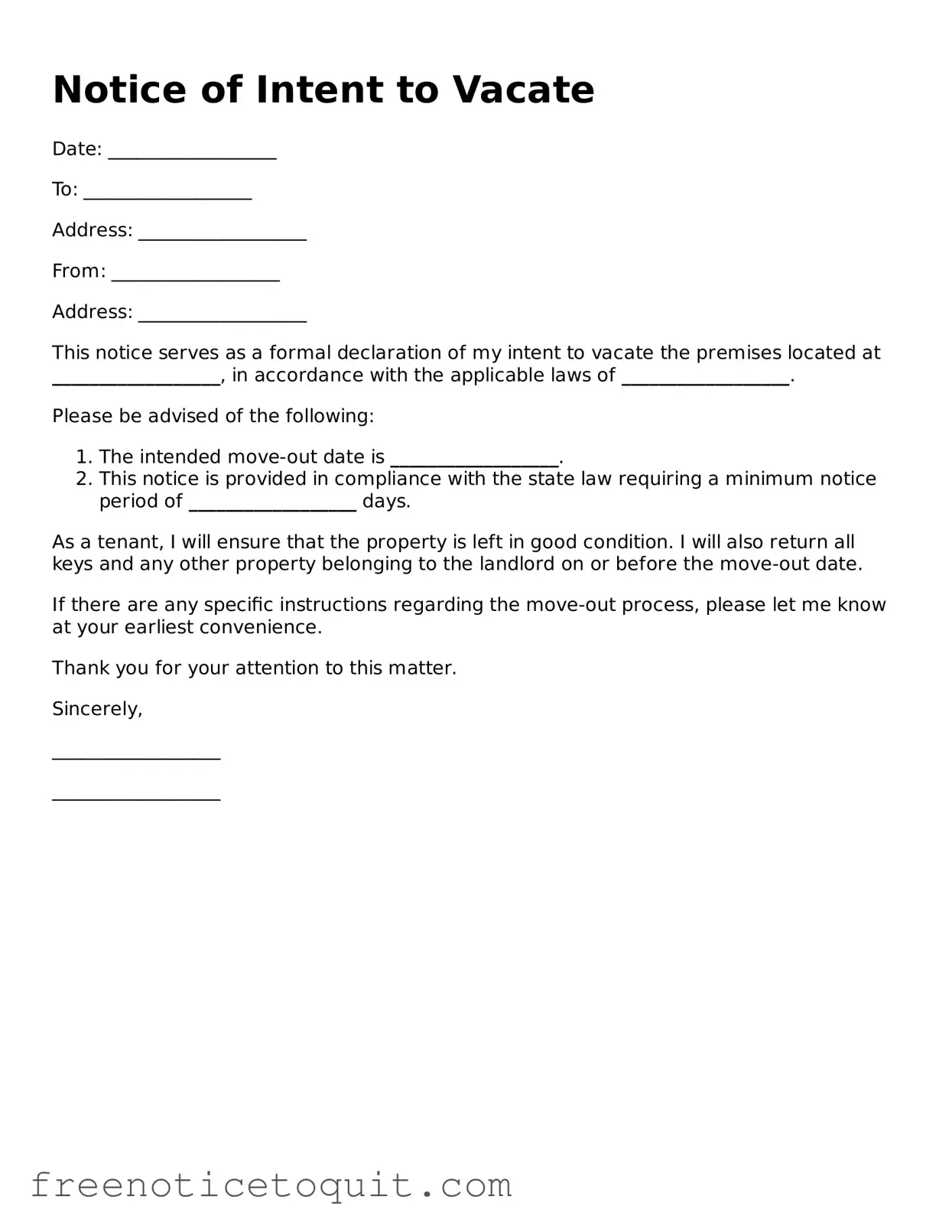
Notice of Intent to Vacate Sample

Notice of Intent to Vacate

Date: __________________

To: __________________

Address: __________________

From: __________________

Address: __________________

This notice serves as a formal declaration of my intent to vacate the premises located at __________________, in accordance with the applicable laws of __________________.

Please be advised of the following:

  1. The intended move-out date is __________________.
  2. This notice is provided in compliance with the state law requiring a minimum notice period of __________________ days.

As a tenant, I will ensure that the property is left in good condition. I will also return all keys and any other property belonging to the landlord on or before the move-out date.

If there are any specific instructions regarding the move-out process, please let me know at your earliest convenience.

Thank you for your attention to this matter.

Sincerely,

__________________

__________________

PDF Data

Fact Name Description
Purpose The Notice of Intent to Vacate form informs a landlord of a tenant's intention to leave the rental property.
State-Specific Forms Each state has its own version of the form, reflecting local laws and regulations regarding tenancy.
Governing Laws The form is governed by state landlord-tenant laws, which dictate the required notice period and procedures.
Notice Period Typically, tenants must provide a notice period ranging from 30 to 60 days, depending on state law.
Delivery Methods The form can often be delivered in person, via certified mail, or through electronic means, depending on state regulations.
Legal Implications Failure to provide proper notice may result in financial penalties or loss of security deposits.

Instructions on Utilizing Notice of Intent to Vacate

Once you have the Notice of Intent to Vacate form ready, it is important to fill it out accurately. After completing the form, you will need to submit it to your landlord or property manager according to your lease agreement. Make sure to keep a copy for your records.

  1. Begin by entering your name in the designated space at the top of the form.
  2. Provide your current address, including the apartment number, street address, city, state, and ZIP code.
  3. Next, fill in the date you are submitting the notice.
  4. Specify the date you plan to vacate the property. This should comply with the notice period stated in your lease.
  5. Include your landlord’s or property manager’s name and their address if required on the form.
  6. Write a brief statement indicating your intention to vacate the property.
  7. Sign the form at the bottom to validate your notice.
  8. Make a copy of the completed form for your records.

FAQ

What is a Notice of Intent to Vacate form?

A Notice of Intent to Vacate form is a written document that a tenant submits to their landlord to officially inform them of their intention to move out of a rental property. This form serves as a formal notification and helps both parties manage the transition smoothly.

Why is it important to submit a Notice of Intent to Vacate?

Submitting this notice is crucial because it establishes a clear timeline for your move. It helps ensure that you comply with your lease agreement, which may require a specific notice period. This can prevent misunderstandings and potential disputes with your landlord regarding your departure.

How much notice do I need to give?

The required notice period can vary depending on your lease agreement and state laws. Typically, it ranges from 30 to 60 days. Always check your lease for specific terms and consult local regulations to ensure compliance.

What should I include in the Notice of Intent to Vacate?

Your Notice should include essential details such as your name, the address of the rental property, the date you intend to vacate, and a request for any necessary final inspections. Including your contact information is also advisable for any follow-up communications.

Can I change my mind after submitting the Notice?

Once submitted, changing your mind can be complicated. If you wish to stay beyond the notice period, communicate with your landlord as soon as possible. Depending on your lease terms and the landlord's policies, they may or may not allow you to retract your notice.

Do I need to send the Notice of Intent to Vacate by a specific method?

While many tenants choose to deliver the notice in person or via certified mail for documentation purposes, the method can depend on your lease agreement. Always ensure you have proof of delivery, regardless of the method you choose.

What happens after I submit the Notice?

After you submit the Notice, your landlord should acknowledge its receipt. They may schedule a final inspection to assess the condition of the property. It is important to prepare for this inspection to ensure you receive your security deposit back in full.

What if I don’t submit a Notice of Intent to Vacate?

Failing to provide a Notice may result in penalties, such as losing your security deposit or facing legal action for breaking the lease. It is always best to adhere to the terms of your lease to avoid complications.

Is there a specific form I need to use?

While there is no universal form required, many landlords provide their own template for the Notice of Intent to Vacate. If your landlord does not provide one, you can create your own as long as it includes all necessary information. Ensure it is clear and concise to avoid any confusion.
Common mistakes

  1. Failing to provide the correct date of intended move-out. It's crucial to specify the exact date to avoid confusion.

  2. Not including the full address of the rental property. Ensure that the address is complete and accurate.

  3. Leaving out the tenant's signature. A signature is necessary for the notice to be valid.

  4. Using unclear or vague language. Be specific about your intentions to vacate to prevent misunderstandings.

  5. Not providing a forwarding address. This is important for receiving any future correspondence or deposits.

  6. Failing to check the notice period requirements in the lease agreement. Each lease may have different rules regarding how much notice is needed.

  7. Not keeping a copy of the submitted notice. Always retain a copy for your records.

  8. Ignoring any additional requirements set by the landlord or property management. Some may have specific instructions for submitting the notice.

  9. Submitting the notice too late. Ensure that you give adequate notice according to your lease terms.

  10. Not following up with the landlord after submission. Confirm that they received your notice to avoid any issues.

Documents used along the form

When preparing to move out of a rental property, it's important to have the right documents in order. Along with the Notice of Intent to Vacate, several other forms and documents may be necessary to ensure a smooth transition. Here’s a list of common documents you might encounter during this process:

  • Lease Agreement: This is the original contract between the landlord and tenant. It outlines the terms of the rental, including the duration, rent amount, and responsibilities of both parties.
  • Move-In Inspection Checklist: This document records the condition of the property when the tenant first moves in. It helps establish the baseline for any potential damages when moving out.
  • Security Deposit Receipt: This receipt confirms the amount of the security deposit paid by the tenant. It’s essential for tracking the return of the deposit after vacating.
  • Final Utility Bill Statements: These statements show the final charges for utilities like water, gas, and electricity. They are often required to ensure all bills are settled before moving out.
  • Forwarding Address Form: This document provides the landlord with the tenant's new address for any future correspondence, including the return of the security deposit.
  • Request for Security Deposit Return: A formal request to the landlord to return the security deposit. This may include the tenant's forwarding address and any relevant details about the lease.
  • Cleaning Checklist: This list outlines the tasks that should be completed before vacating, ensuring the property is left in good condition and helping avoid deductions from the security deposit.
  • Tenant's Notice of Abandonment: If a tenant leaves the property without notice, this document formally informs the landlord of the abandonment, which can affect the return of the security deposit.

Having these documents on hand can help make the moving process easier and more organized. Each plays a crucial role in ensuring that both tenants and landlords fulfill their obligations and protect their interests during the transition.

Similar forms

The Notice of Termination is a document that serves a similar purpose to the Notice of Intent to Vacate. Both forms communicate an individual's intention to end a lease or rental agreement. The Notice of Termination, however, is often used by landlords to inform tenants that their lease will not be renewed or is being terminated for specific reasons, such as lease violations or non-payment of rent. This document typically outlines the reasons for termination and the timeline for vacating the property, ensuring that both parties are clear about their rights and responsibilities.

The Lease Termination Agreement is another document closely related to the Notice of Intent to Vacate. This agreement is a mutual understanding between the landlord and tenant, signifying that both parties agree to end the lease before its original expiration date. Unlike the Notice of Intent to Vacate, which is a unilateral declaration by the tenant, the Lease Termination Agreement requires the consent of both parties. It often includes details about the move-out process, any final payments, and the condition of the property upon vacating.

The Eviction Notice is a more serious document that shares similarities with the Notice of Intent to Vacate. While the latter is typically issued by a tenant wishing to leave a property, the Eviction Notice is served by a landlord to a tenant who is violating lease terms or failing to pay rent. Both documents serve as formal notifications regarding occupancy status, but the Eviction Notice often leads to legal proceedings if the tenant does not comply. It is critical for tenants to understand the implications of receiving an Eviction Notice compared to submitting their own Notice of Intent to Vacate.

The Move-Out Checklist is another document that complements the Notice of Intent to Vacate. While the Notice signals the tenant's intention to leave, the Move-Out Checklist provides a detailed list of tasks that need to be completed before vacating the property. This checklist helps ensure that tenants fulfill their obligations regarding cleaning, repairs, and returning keys. It serves as a guide to facilitate a smooth transition and helps avoid disputes over security deposit deductions.

The Rental Agreement itself is a foundational document that relates to the Notice of Intent to Vacate. This agreement outlines the terms and conditions of the rental arrangement, including the duration of the lease, rent amount, and responsibilities of both parties. When a tenant submits a Notice of Intent to Vacate, they are essentially referencing the terms laid out in the Rental Agreement. Understanding the original agreement is crucial for both tenants and landlords as they navigate the process of ending the lease.

Lastly, the Security Deposit Return Form is another important document connected to the Notice of Intent to Vacate. When a tenant decides to vacate, they often seek the return of their security deposit. This form is typically submitted to the landlord, detailing the tenant's request for the return of the deposit, along with any deductions for damages or unpaid rent. Both documents are integral to the move-out process, as they address the financial aspects of vacating a rental property and ensure that both parties are clear about any outstanding issues.

Dos and Don'ts

When you're preparing to move out of your rental property, filling out the Notice of Intent to Vacate form is a crucial step. Here are some important dos and don'ts to keep in mind:

  • Do provide your current address and the date you plan to vacate.
  • Do check your lease agreement for specific notice requirements.
  • Don't forget to sign and date the form before submitting it.
  • Don't leave out any necessary details that could delay your move-out process.

Misconceptions

The Notice of Intent to Vacate form is an important document in the rental process, yet several misconceptions surround its purpose and use. Understanding these misconceptions can help both tenants and landlords navigate the process more effectively. Below are five common misunderstandings:

  • It is only for tenants who are breaking their lease. Many believe that this form is solely for tenants who wish to terminate their lease early. In reality, it can also be used by tenants who are simply providing notice that they will not be renewing their lease at the end of the term.
  • Submitting the form guarantees the return of the security deposit. Some tenants think that by submitting the Notice of Intent to Vacate, they automatically secure the return of their security deposit. However, the return of the deposit depends on the condition of the property and adherence to lease terms, not just the submission of the notice.
  • It must be submitted in person. A common belief is that tenants must deliver the Notice of Intent to Vacate in person to their landlord. Many landlords accept notices via email or certified mail, making it easier for tenants to submit the form without needing to meet face-to-face.
  • The notice period is the same in every state. Some individuals assume that the notice period required for vacating is uniform across the country. In fact, notice periods can vary significantly by state and sometimes by local jurisdiction, so it's essential to check local laws.
  • It can be submitted at any time. Many tenants think they can submit the Notice of Intent to Vacate whenever they choose. However, there are often specific timelines outlined in the lease agreement that dictate when the notice must be provided to be considered valid.

By clarifying these misconceptions, both tenants and landlords can ensure a smoother transition during the moving process and uphold their respective rights and responsibilities.

Key takeaways

Filling out and using the Notice of Intent to Vacate form is a crucial step for tenants planning to move out of a rental property. Here are some key takeaways to keep in mind:

  • Be clear and concise when providing your information. Include your name, address, and the date you plan to vacate.
  • Check your lease agreement for any specific requirements regarding notice periods. Most leases require a 30-day notice.
  • Deliver the notice in a manner that complies with your lease terms. This may include mailing it or delivering it in person.
  • Keep a copy of the Notice of Intent to Vacate for your records. This serves as proof that you provided notice.
  • Consider discussing your move with your landlord. Open communication can help ensure a smooth transition.
  • Be aware of any potential deductions from your security deposit. Understand the condition in which you need to leave the property.

Official Notice of Intent to Vacate Form

Open Notice of Intent to Vacate Editor Here