Similar forms
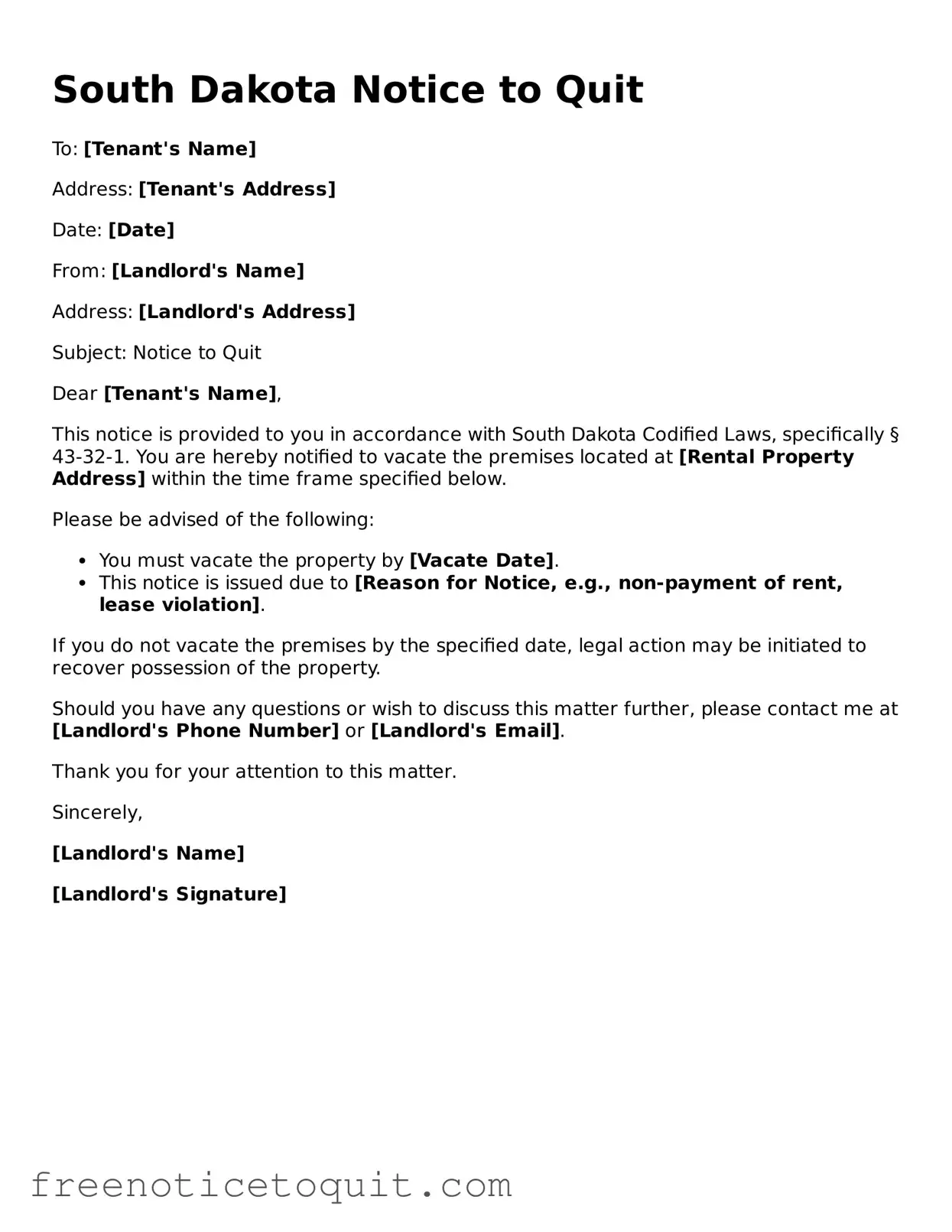
The South Dakota Notice to Quit form is similar to the Eviction Notice used in many states. Both documents serve as formal notifications to tenants that they must vacate the rental property. An Eviction Notice typically outlines the reasons for the eviction, such as failure to pay rent or violation of lease terms. It also specifies a timeframe for the tenant to leave, which can vary by state. The goal of both documents is to inform tenants of their obligations and the consequences of not complying.
Another comparable document is the Lease Termination Notice. This notice is issued by landlords when they decide not to renew a lease agreement. It informs tenants that their tenancy will end on a specific date. Like the Notice to Quit, it must comply with state laws regarding notice periods. Both documents aim to provide clarity and give tenants time to prepare for their move.
The Three-Day Notice to Pay Rent or Quit is also similar. This document is specifically used when a tenant has failed to pay rent. It demands that the tenant either pay the overdue rent or vacate the property within three days. Like the Notice to Quit, it serves as a warning and provides a clear timeframe for action, helping landlords initiate the eviction process if necessary.
The 30-Day Notice to Vacate is another related document. This notice is often used in month-to-month rental agreements. It informs tenants that they must leave the property within 30 days. While the Notice to Quit may be used for various reasons, the 30-Day Notice specifically addresses the end of a rental agreement. Both documents are crucial for ensuring that tenants understand their rights and responsibilities.
The Notice of Non-Renewal is similar in purpose to the Notice to Quit but is used when a landlord chooses not to renew a lease. This document outlines the landlord's intent and provides a clear end date for the tenancy. Both notices are essential for maintaining clear communication between landlords and tenants regarding the status of their rental agreement.
The Conditional Quit Notice is another document that bears resemblance to the Notice to Quit. This notice is issued when a tenant violates specific terms of their lease. It gives the tenant a chance to correct the issue or face eviction. Like the Notice to Quit, it emphasizes the importance of adhering to lease terms and outlines the potential consequences of non-compliance.
The Notice to Comply is also similar, as it is used when a tenant is in violation of lease terms. This document details the specific violations and gives the tenant a set period to correct them. Both the Notice to Comply and the Notice to Quit aim to ensure that tenants understand their responsibilities and the potential for eviction if issues are not resolved.
Lastly, the Demand for Possession is akin to the Notice to Quit. This document is often used in the eviction process to formally request that a tenant vacate the premises. It may follow other notices and serves as a final reminder of the need to leave. Both documents are integral to the eviction process and ensure that landlords follow the proper legal channels when seeking possession of their property.