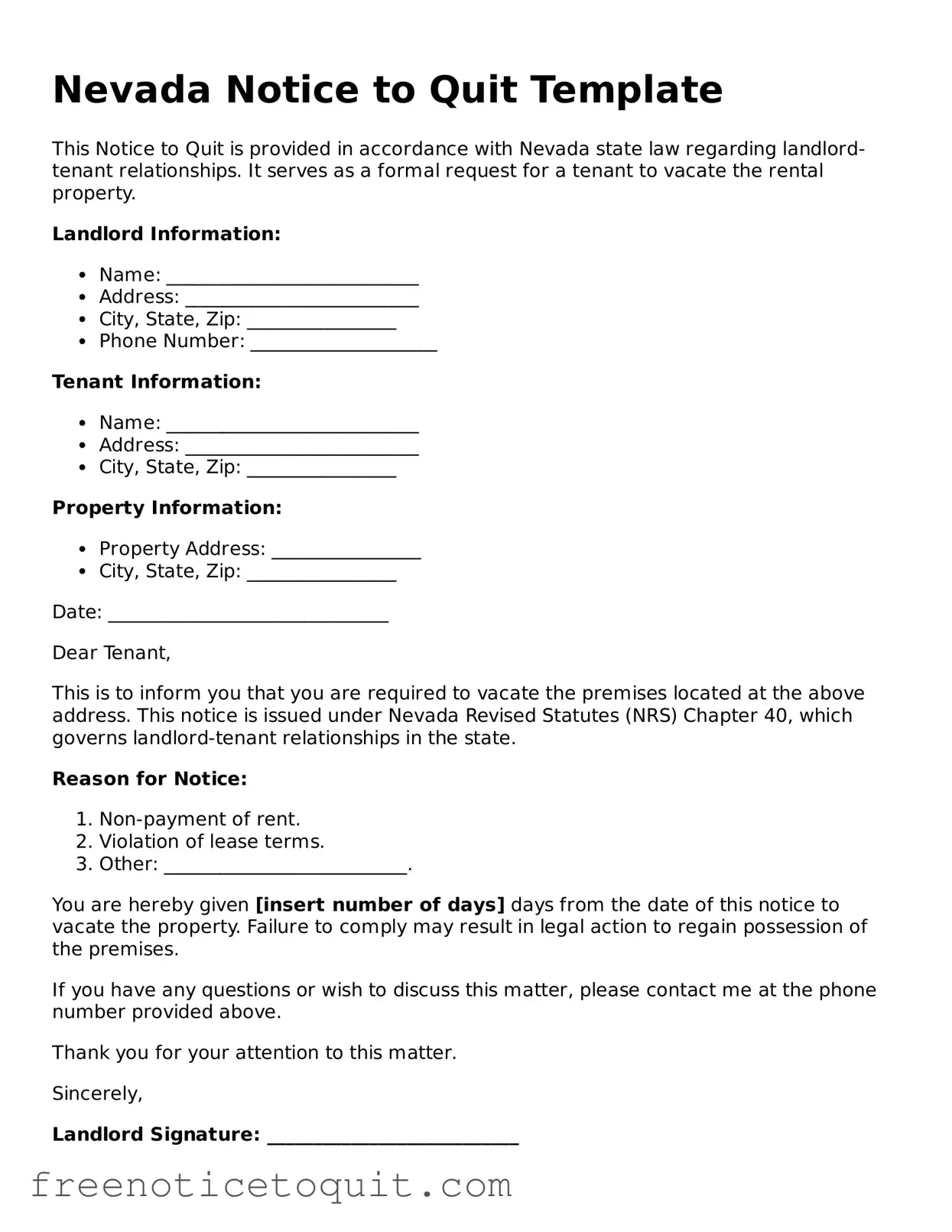
What is a Nevada Notice to Quit form?
The Nevada Notice to Quit form is a legal document used by landlords to notify tenants that they must vacate the rental property. This notice typically indicates the reason for eviction and provides a specific timeframe within which the tenant must leave the premises.
When is a Notice to Quit required in Nevada?
A Notice to Quit is required when a landlord wishes to terminate a tenancy. This may occur for various reasons, such as non-payment of rent, lease violations, or the expiration of a lease agreement. The notice serves as a formal communication that the landlord intends to regain possession of the property.
How long does a tenant have to respond to a Notice to Quit?
The response time can vary depending on the reason for the notice. For non-payment of rent, tenants typically have five days to pay the overdue rent or vacate. For other lease violations, the notice may provide a longer period, often 30 days, for the tenant to remedy the issue or leave.
What information must be included in a Notice to Quit?
A proper Notice to Quit should include the tenant's name, the address of the rental property, the reason for the eviction, and the specific date by which the tenant must vacate. Clarity is essential to avoid confusion and potential legal disputes.
Can a tenant contest a Notice to Quit?
Yes, a tenant can contest a Notice to Quit. If a tenant believes the notice is unjust or that they have not violated the lease terms, they may choose to respond in writing or seek legal counsel. It is advisable to act promptly to preserve their rights.
What happens if a tenant does not comply with the Notice to Quit?
If a tenant does not comply with the Notice to Quit, the landlord may initiate formal eviction proceedings. This process typically involves filing a complaint in court and obtaining a judgment for eviction. Tenants should be aware that ignoring the notice can lead to legal consequences.
Is a Notice to Quit the same as an eviction notice?
While a Notice to Quit is a type of eviction notice, not all eviction notices are the same. A Notice to Quit is the initial step in the eviction process, informing the tenant to leave. If the tenant does not vacate, the landlord may proceed with further legal action to evict them.
Can a Notice to Quit be delivered verbally?
In Nevada, a Notice to Quit must be provided in writing. Verbal notices are not legally binding and do not fulfill the requirements for eviction. A written notice ensures that there is a clear record of communication between the landlord and tenant.
What should a landlord do if a tenant refuses to leave after receiving a Notice to Quit?
If a tenant refuses to leave after receiving a Notice to Quit, the landlord should not attempt to forcibly remove the tenant. Instead, the landlord should file an eviction lawsuit in the appropriate court. This legal process will allow the landlord to obtain a court order for eviction.
Are there any exceptions to the Notice to Quit process in Nevada?
Yes, there are certain exceptions. For example, if a tenant has been a victim of domestic violence, they may have specific protections under Nevada law. Additionally, some local ordinances may provide additional rights or requirements that landlords must follow. It is essential to be aware of these exceptions when dealing with eviction matters.