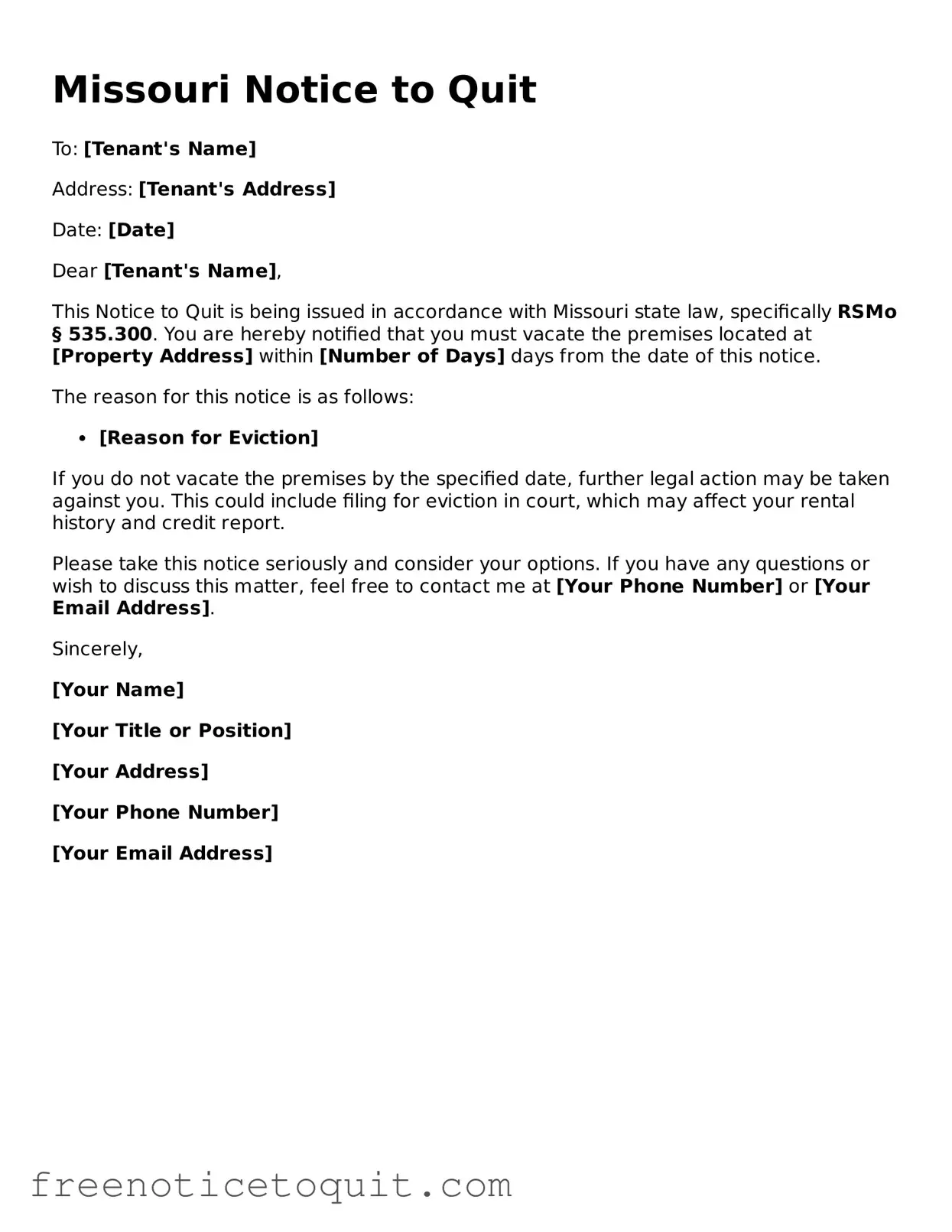
The Missouri Notice to Quit form serves as a formal request for tenants to vacate a rental property. It shares similarities with the Eviction Notice, which is issued by landlords when tenants fail to pay rent or violate lease terms. Both documents outline the reasons for termination and specify a time frame for the tenant to leave the premises. The Eviction Notice, however, often follows a Notice to Quit and can lead to legal proceedings if the tenant does not comply.
Another document similar to the Notice to Quit is the Lease Termination Letter. This letter can be initiated by either the landlord or the tenant to officially end a rental agreement. Like the Notice to Quit, it must include specific details about the lease, such as the termination date and any required actions. However, the Lease Termination Letter typically reflects mutual agreement rather than a demand for eviction.
The 3-Day Notice to Pay Rent or Quit is also akin to the Missouri Notice to Quit. This notice specifically addresses situations where tenants have not paid rent. It demands payment within three days or the tenant must vacate the property. While both documents aim to prompt tenant action, the 3-Day Notice focuses solely on rent issues, whereas the Notice to Quit can cover broader lease violations.
Similarly, the 30-Day Notice to Vacate is another related document. This notice is commonly used in month-to-month rental agreements and requires tenants to vacate the property with at least 30 days' notice. It serves as a less urgent alternative to the Notice to Quit, which can be issued for immediate eviction due to significant lease violations.
The Cure or Quit Notice is another document that shares characteristics with the Notice to Quit. This notice is sent when a tenant has violated a lease term but has the opportunity to remedy the situation within a specified time frame. It emphasizes the need for corrective action before eviction proceedings can begin, making it a proactive step compared to the more final nature of the Notice to Quit.
The Notice of Default is similar in that it indicates a breach of contract, often related to payment issues. This document is frequently used in mortgage agreements but can also apply to rental situations. It notifies the tenant of their default and outlines the necessary steps to rectify the situation, similar to how a Notice to Quit outlines the tenant's obligation to vacate.
The Demand for Possession is another document that aligns with the Notice to Quit. This legal notice is typically issued after a tenant has failed to comply with a lease agreement. It demands that the tenant vacate the property immediately or face further legal action. Both documents serve to communicate the landlord's intent to reclaim possession of the property.
The Termination of Tenancy Notice is also comparable to the Missouri Notice to Quit. This document is used when a landlord wishes to terminate a tenancy for any lawful reason. It must adhere to state laws regarding notice periods and can serve as a precursor to eviction. Both documents aim to inform tenants of their need to leave, though the Termination of Tenancy Notice may not always indicate a breach.
Finally, the Notice of Lease Violation is similar in its purpose of notifying tenants of specific breaches of the lease agreement. This notice details the violations and often gives tenants a chance to correct them. While the Notice to Quit demands action in the form of vacating the property, the Notice of Lease Violation may provide an opportunity for tenants to remain if they address the issues raised.