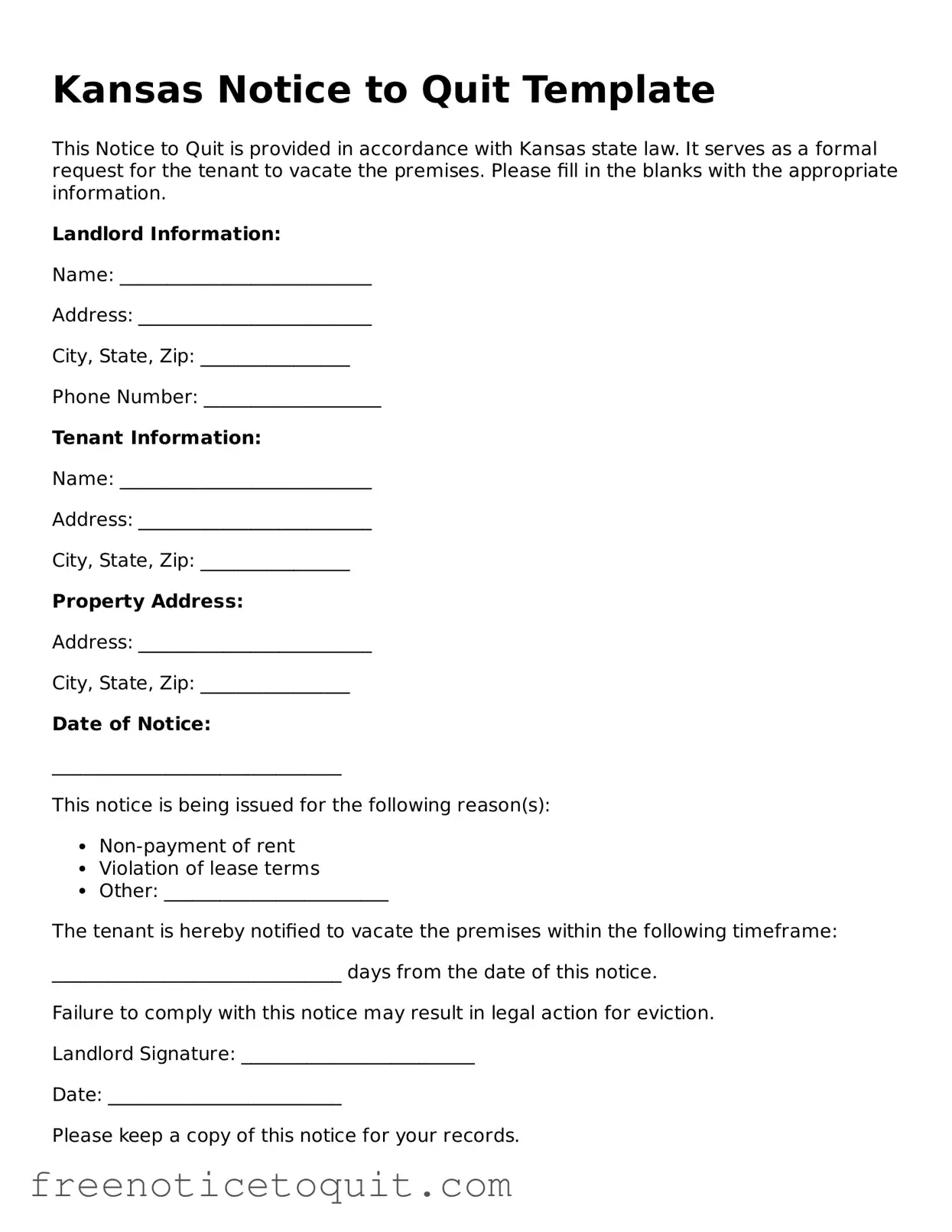
The Kansas Notice to Quit form is similar to the Eviction Notice commonly used in many states. Both documents serve the purpose of informing a tenant that they must vacate the premises. The Eviction Notice typically outlines the reasons for the eviction, such as non-payment of rent or lease violations. It provides a clear timeframe for the tenant to leave, often ranging from a few days to several weeks, depending on local laws. This document is crucial for landlords to initiate legal proceedings if the tenant fails to comply.
Another comparable document is the Lease Termination Notice. This notice is issued when a landlord or tenant wishes to end a rental agreement. It specifies the date the lease will terminate and may include reasons for the termination. Unlike the Kansas Notice to Quit, which is often tied to specific violations, the Lease Termination Notice can be used for any reason, including the end of a lease term. It ensures both parties are aware of the timeline and expectations regarding the rental agreement.
The Pay or Quit Notice is also similar to the Kansas Notice to Quit. This document is specifically used when a tenant has not paid rent. It provides the tenant with a specified period to pay the overdue rent or vacate the property. The urgency of this notice emphasizes the importance of timely rent payments. If the tenant fails to respond appropriately, the landlord may proceed with eviction proceedings.
A Three-Day Notice to Pay Rent or Quit is another relevant document. This notice is often used in various states, including Kansas, to demand payment of rent within three days. It is a formal request for the tenant to either pay the owed rent or vacate the property. The three-day timeframe creates a sense of urgency, compelling tenants to address their financial obligations quickly to avoid eviction.
The Cure or Quit Notice is similar in that it addresses lease violations. This document informs a tenant of specific breaches, such as unauthorized pets or property damage. The tenant is given a chance to remedy the violation within a specified timeframe or face eviction. This notice promotes communication and resolution between landlords and tenants, allowing for potential fixes before legal action is taken.
The Notice of Lease Violation is another document that shares similarities with the Kansas Notice to Quit. This notice details the specific violations committed by the tenant, such as noise complaints or illegal activities. It serves as a formal warning and often includes a timeframe for the tenant to correct the issue. Failure to address the violation may lead to further action, including eviction.
The Conditional Quit Notice is comparable as well. This document informs the tenant that they must vacate the premises if a certain condition is not met. Unlike a standard Notice to Quit, which may be issued for various reasons, the Conditional Quit Notice is tied to specific actions or inactions by the tenant. It sets clear expectations and consequences, ensuring that tenants understand the implications of their actions.
Lastly, the Notice of Non-Renewal is similar in that it informs tenants that their lease will not be renewed at the end of the term. This notice provides tenants with advance warning, allowing them to seek alternative housing. While it may not be tied to specific violations, it plays a crucial role in the landlord-tenant relationship, ensuring transparency and clarity regarding future living arrangements.