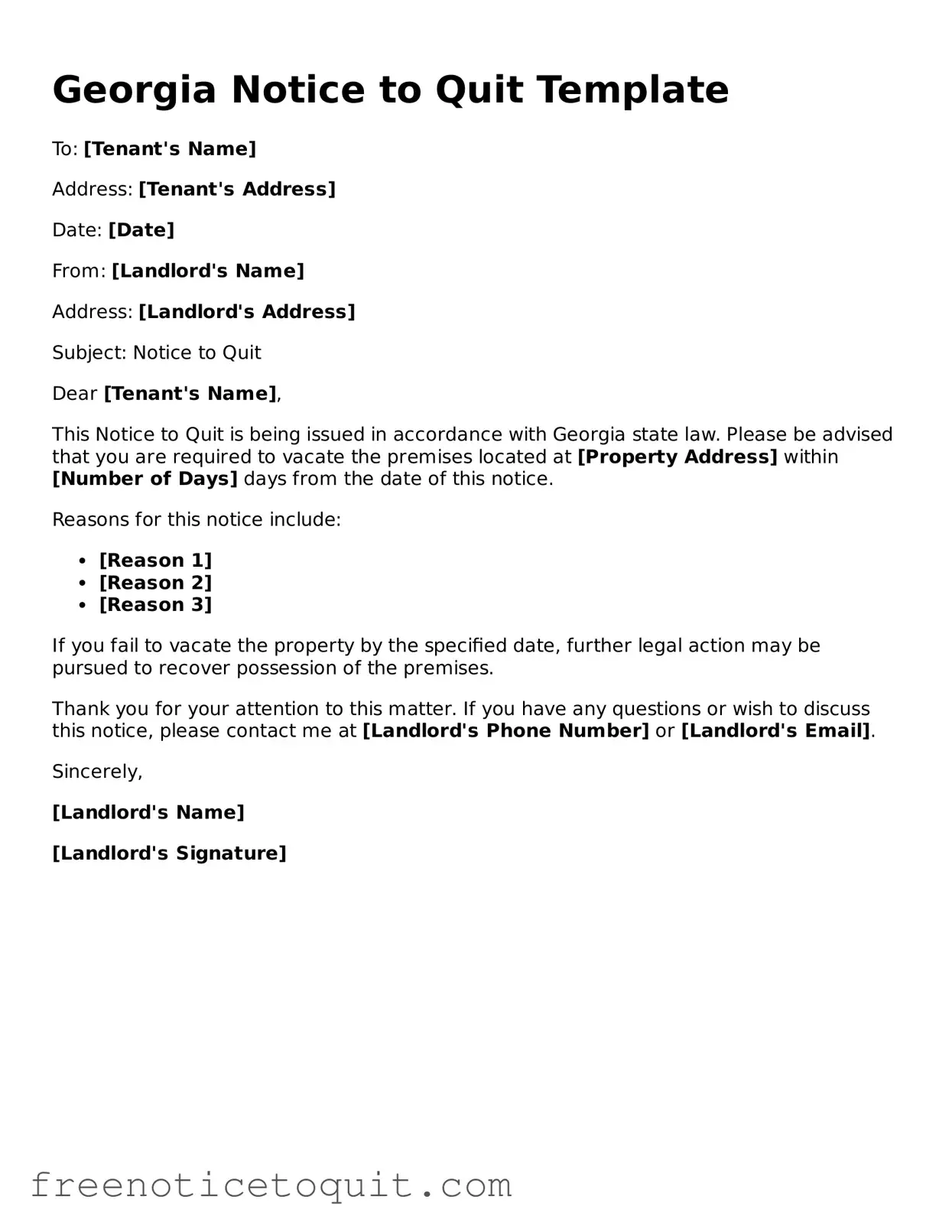
The Georgia Notice to Quit form is similar to the Eviction Notice, which is a formal notification given to tenants when a landlord seeks to terminate a rental agreement. Both documents serve as a way to inform tenants that they must vacate the premises, usually due to non-payment of rent or lease violations. However, while the Notice to Quit may be a precursor to eviction, the Eviction Notice typically follows a legal process and includes specific details about the court proceedings that may ensue if the tenant does not comply.
Another document that resembles the Georgia Notice to Quit is the Pay or Quit Notice. This notice is specifically used when a tenant has failed to pay rent. It clearly states the amount owed and gives the tenant a set period to pay the overdue rent or face eviction. Like the Notice to Quit, it is a crucial step in the eviction process, but it focuses solely on the issue of unpaid rent rather than other lease violations.
The Three-Day Notice to Pay Rent or Quit is also similar. This document is commonly used in various states, including Georgia, to inform tenants that they have three days to pay their overdue rent or vacate the property. It is a specific type of Pay or Quit Notice that emphasizes the urgency of the situation. The timeframe is shorter, providing a quick resolution to the landlord's concerns.
The Notice of Lease Termination is another related document. This notice is issued when a landlord decides to end a lease agreement for reasons other than tenant misconduct. It outlines the termination date and any necessary actions the tenant must take. While the Georgia Notice to Quit may be used in situations involving lease violations, the Notice of Lease Termination is more about ending the rental agreement itself.
The Cure or Quit Notice also shares similarities with the Georgia Notice to Quit. This document is issued when a tenant has violated a term of the lease, giving them a chance to correct the issue within a specified time frame. If the tenant fails to remedy the violation, they must vacate the property. Both notices serve to inform tenants of their obligations, but the Cure or Quit Notice emphasizes the opportunity for tenants to fix the problem before facing eviction.
The 14-Day Notice to Quit is another document that parallels the Georgia Notice to Quit. Used in some states, this notice gives tenants a two-week timeframe to vacate the property due to lease violations. The key difference is the specific time frame and the context in which it is used, but both documents aim to inform tenants of the need to leave the premises.
The Notice of Non-Renewal is also comparable to the Georgia Notice to Quit. This document is sent when a landlord decides not to renew a lease at its expiration. It provides tenants with advance notice that they must vacate the property when the lease term ends. While the Notice to Quit may be used in cases of immediate lease violations, the Notice of Non-Renewal is more about planning for the future.
Lastly, the Demand for Possession is similar in purpose to the Georgia Notice to Quit. This document is often used in the eviction process to formally demand that a tenant vacate the property. It typically follows other notices and is a step closer to legal action. While both documents aim to prompt tenants to leave, the Demand for Possession is usually issued after previous notices have been ignored.