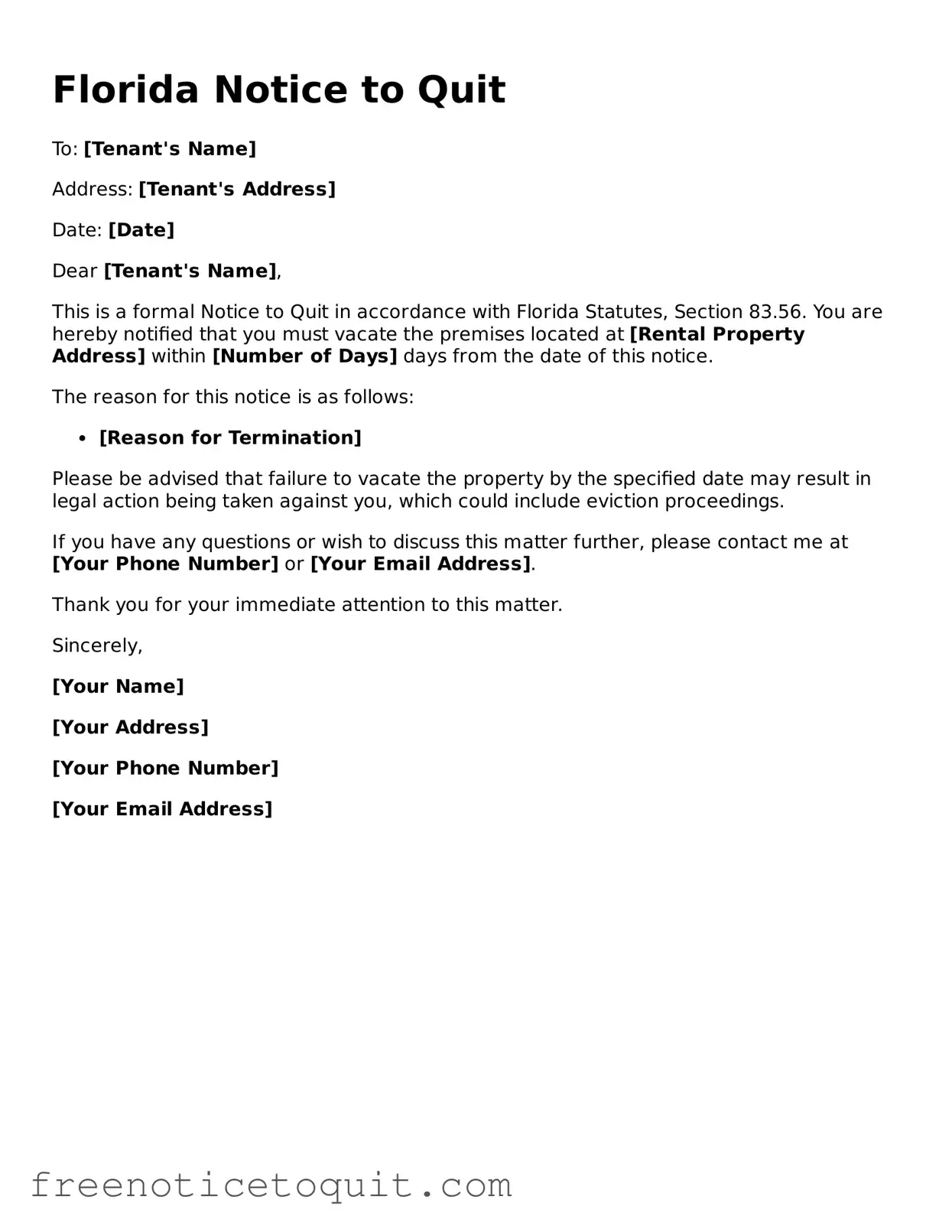
The Florida Notice to Quit form is similar to the Eviction Notice used in many states. Both documents serve as a formal communication from a landlord to a tenant, indicating that the tenant must vacate the property. The Eviction Notice typically outlines the reasons for the eviction, such as non-payment of rent or violation of lease terms. This document is crucial for landlords to begin the legal process of eviction, just like the Notice to Quit is essential in Florida.
Another document that parallels the Florida Notice to Quit is the Three-Day Notice to Pay Rent or Quit. This notice is specific to situations where tenants have failed to pay their rent on time. It gives tenants a clear deadline—usually three days—to either pay the overdue rent or vacate the premises. Like the Notice to Quit, this document serves as a precursor to potential eviction proceedings, making it an important tool for landlords.
The California Notice to Quit is also quite similar. In California, this notice can be issued for various reasons, including non-payment of rent or lease violations. Both the Florida and California versions serve the same purpose: to inform tenants that they must leave the property. The key difference lies in the specific legal requirements and timelines that vary by state.
The New York Notice of Termination is another document that shares similarities with the Florida Notice to Quit. This notice is used to terminate a lease for various reasons, including non-payment or lease violations. Both documents must be delivered to the tenant and outline the reasons for termination, although New York has its own specific rules regarding the notice period and delivery method.
The Texas Notice to Vacate is comparable as well. In Texas, landlords can issue this notice when tenants have violated the lease agreement or have not paid rent. Like the Florida Notice to Quit, it is a necessary step before initiating eviction proceedings. The Texas document typically specifies the timeframe within which the tenant must vacate, similar to the requirements in Florida.
The Illinois Five-Day Notice to Quit is another relevant document. This notice is issued when a tenant fails to pay rent, giving them five days to either pay or leave. Both the Illinois and Florida notices aim to provide tenants with a clear understanding of their obligations and the consequences of failing to meet them. The timeframe and conditions may differ, but the underlying purpose remains the same.
The Massachusetts Notice to Quit also bears resemblance to the Florida form. This document is used to inform tenants that they must vacate the property, often due to lease violations or non-payment of rent. Both documents serve as a formal notification and are essential in the eviction process, although Massachusetts has specific rules about the notice period that landlords must follow.
The Washington State Notice to Pay Rent or Vacate is another similar document. This notice is issued when a tenant has not paid rent, giving them a specific timeframe to either pay or leave the property. Like the Florida Notice to Quit, it is a critical step in the eviction process, ensuring that tenants understand their obligations and the potential consequences of non-compliance.
Finally, the Virginia Notice to Quit is comparable to the Florida document. This notice serves to inform tenants that they must vacate the property, often due to lease violations or failure to pay rent. Both documents are essential for landlords to initiate the eviction process, although the specific legal requirements and timelines differ between the two states.