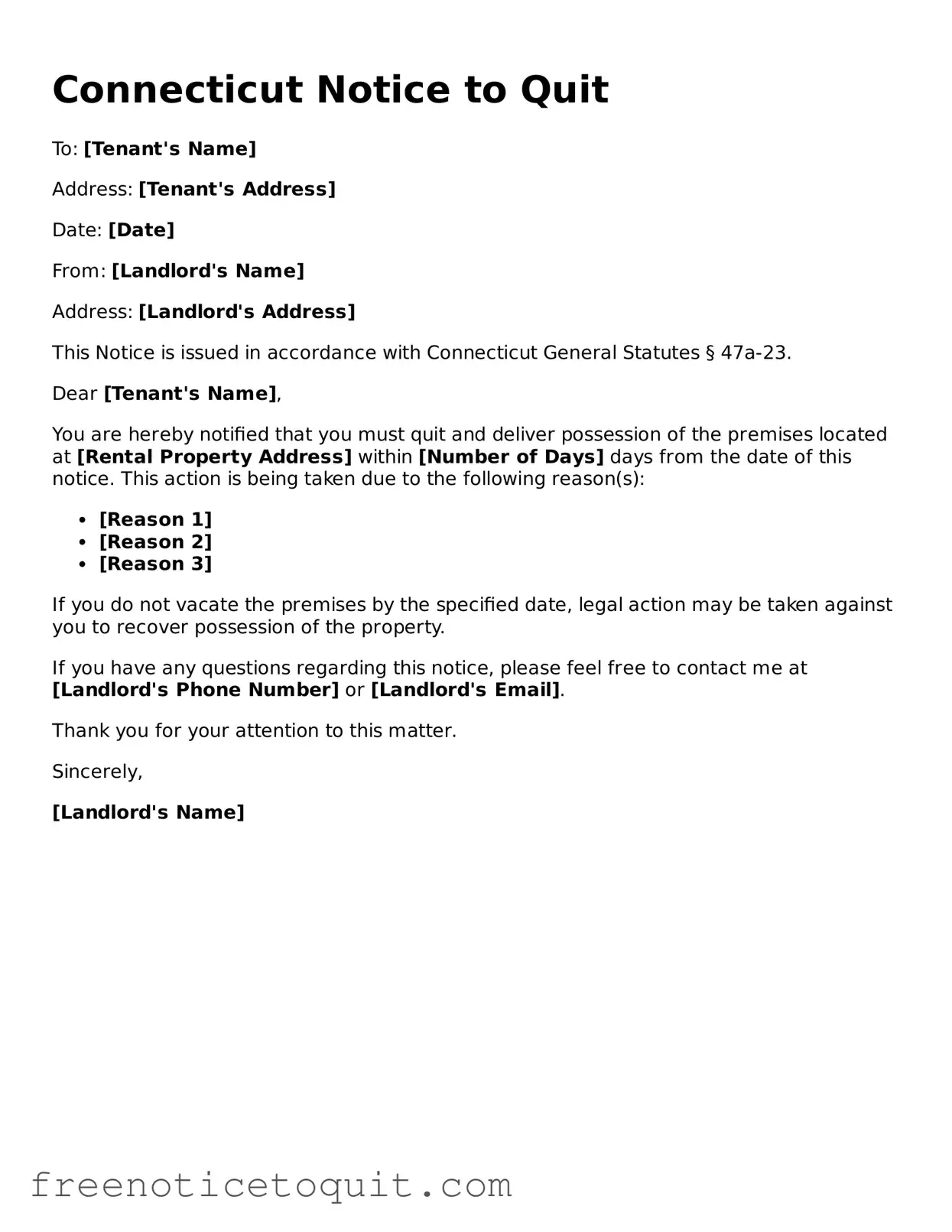
What is a Notice to Quit in Connecticut?
A Notice to Quit is a formal document that a landlord uses to notify a tenant that they must vacate the rental property. This notice typically serves as the first step in the eviction process. It outlines the reason for the eviction, which may include non-payment of rent or violation of lease terms.
How long does a tenant have to respond to a Notice to Quit?
In Connecticut, the time frame for a tenant to respond to a Notice to Quit depends on the reason for the notice. For non-payment of rent, the tenant generally has 5 days to either pay the owed rent or vacate the premises. For other lease violations, the tenant may have 15 days to remedy the issue or leave the property.
What must be included in a Notice to Quit?
A valid Notice to Quit should include specific information: the address of the rental property, the reason for the eviction, the date by which the tenant must vacate, and the signature of the landlord or their authorized agent. Clear communication is essential to ensure the tenant understands the situation.
Can a tenant contest a Notice to Quit?
Yes, a tenant has the right to contest a Notice to Quit. If they believe the notice is unjust or that they have not violated any lease terms, they can challenge the eviction in court. It’s important for tenants to gather evidence and documentation to support their case.
What happens if a tenant does not leave by the deadline in the Notice to Quit?
If the tenant fails to vacate the property by the deadline specified in the Notice to Quit, the landlord can file an eviction lawsuit, known as a summary process action, in court. This legal action can lead to a court order requiring the tenant to leave the property.
Is a Notice to Quit the same as an eviction notice?
While a Notice to Quit is an initial step in the eviction process, it is not the same as an eviction notice. The Notice to Quit informs the tenant of the landlord's intention to terminate the lease, while an eviction notice typically follows if the tenant does not comply with the Notice to Quit.
Can a tenant receive a Notice to Quit for reasons other than non-payment of rent?
Absolutely. A landlord can issue a Notice to Quit for various reasons, including lease violations, property damage, or illegal activities on the premises. Each reason must be clearly stated in the notice to ensure the tenant understands the grounds for eviction.
Do landlords need to provide a reason for the Notice to Quit?
Yes, landlords must provide a reason for the Notice to Quit, especially if the eviction is due to lease violations. This transparency helps tenants understand the issues at hand and gives them an opportunity to address or rectify the situation.
Can a Notice to Quit be served electronically?
In Connecticut, the law generally requires that a Notice to Quit be delivered in person or sent via certified mail. Electronic delivery, such as email or text message, is not typically acceptable for this legal document. It’s important to follow the proper procedures to ensure the notice is valid.
What should tenants do if they receive a Notice to Quit?
If a tenant receives a Notice to Quit, they should take it seriously. First, they should review the notice carefully to understand the reason for eviction and the deadline provided. It’s advisable to consult with a legal professional to discuss their options and rights, especially if they believe the notice is unjust.