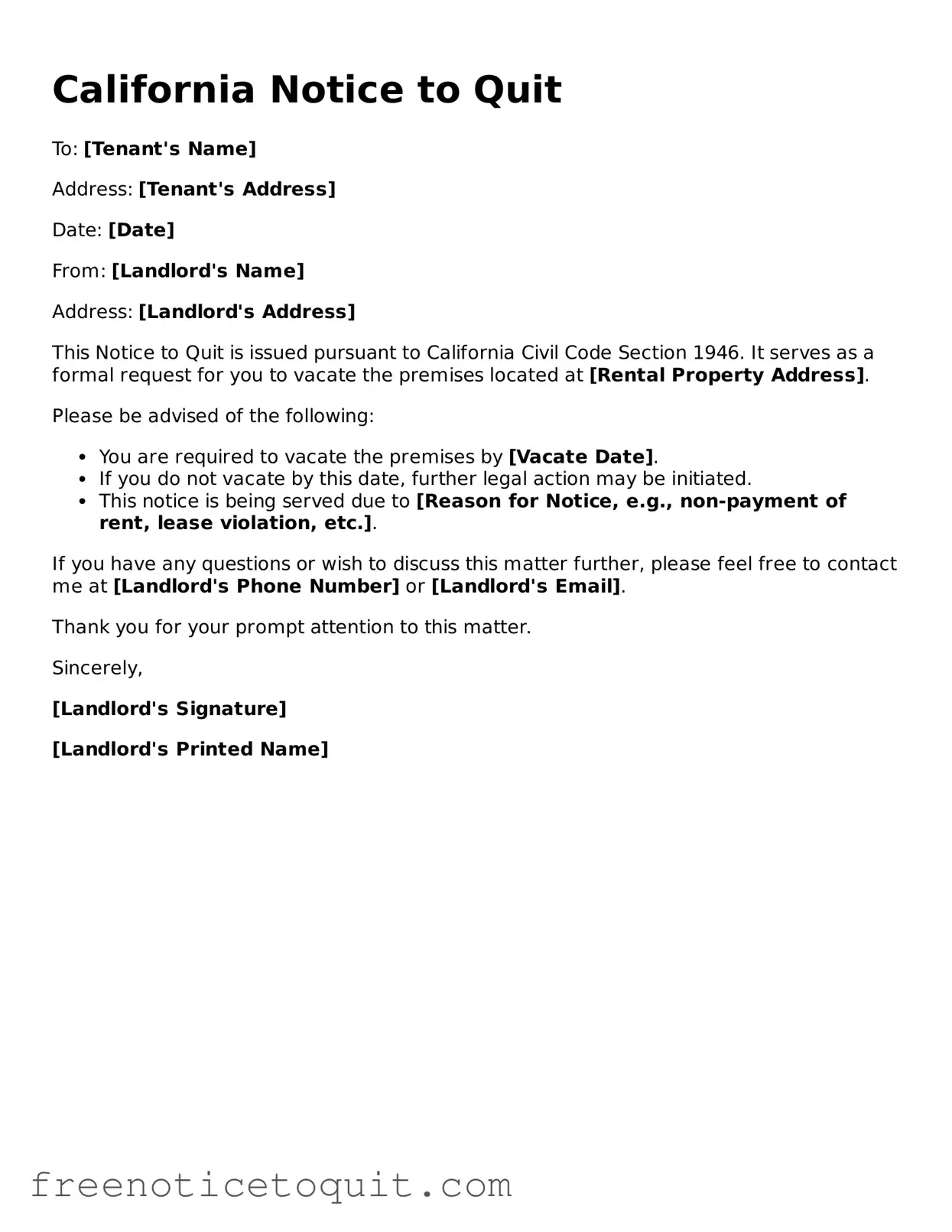
The California Notice to Quit form shares similarities with the Eviction Notice, which is commonly used in many states. Both documents serve as formal notifications to tenants regarding the termination of their lease agreements. The Eviction Notice typically outlines the reasons for eviction, such as non-payment of rent or lease violations, and provides a specific timeframe for the tenant to vacate the property. Like the Notice to Quit, it aims to inform the tenant of their rights and obligations while initiating the legal process for eviction.
Another document similar to the California Notice to Quit is the Pay or Quit Notice. This notice is specifically issued when a tenant has failed to pay rent. It informs the tenant that they must either pay the overdue rent within a specified period or vacate the premises. Both documents emphasize the tenant's responsibility to address lease terms, but the Pay or Quit Notice focuses solely on financial obligations.
The Three-Day Notice is also akin to the California Notice to Quit. This document is used in situations where a tenant has violated lease terms other than non-payment of rent. It provides a three-day window for the tenant to remedy the violation or face eviction. Both notices serve as a precursor to legal action, aiming to resolve issues before they escalate.
The Conditional Quit Notice is another document that resembles the California Notice to Quit. This notice is issued when a tenant's lease is terminated due to specific conditions, such as repeated lease violations. It clearly outlines the conditions that must be met for the tenant to remain in the property. Both documents emphasize the need for tenants to comply with lease terms to avoid eviction.
The Notice of Termination is similar to the California Notice to Quit in that it formally communicates the landlord's intent to end a tenancy. This document can be used for various reasons, including lease expiration or landlord's personal use of the property. Both notices serve to inform tenants of impending changes and provide them with a timeline to prepare for relocation.
The Lease Termination Letter also shares similarities with the California Notice to Quit. This document is typically issued when a lease is coming to an end, and it notifies the tenant of the need to vacate the property. While the Notice to Quit often addresses lease violations, the Lease Termination Letter focuses on the natural conclusion of a rental agreement.
The Notice of Default is another document that bears resemblance to the California Notice to Quit. It is often used in the context of mortgage agreements but can apply to rental situations as well. This notice informs the tenant of their failure to meet specific obligations, such as paying rent. Both documents alert tenants to potential legal consequences if they do not rectify the situation.
The Notice of Non-Renewal is similar to the California Notice to Quit in that it communicates the landlord's decision not to renew a lease. This notice provides tenants with information about the end of their tenancy and allows them time to find alternative housing. Both documents serve to ensure that tenants are aware of their housing situation and can make necessary arrangements.
The Demand for Possession is another document that aligns with the California Notice to Quit. This legal notice is often used in eviction proceedings and demands that the tenant vacate the property. Both documents serve as formal requests for tenants to leave, but the Demand for Possession is typically a step further along in the eviction process.
Lastly, the Notice of Violation is similar to the California Notice to Quit in that it addresses lease breaches. This document outlines specific violations and provides a timeframe for the tenant to correct the issues. Both notices aim to inform tenants of their responsibilities and the consequences of failing to comply with lease terms.