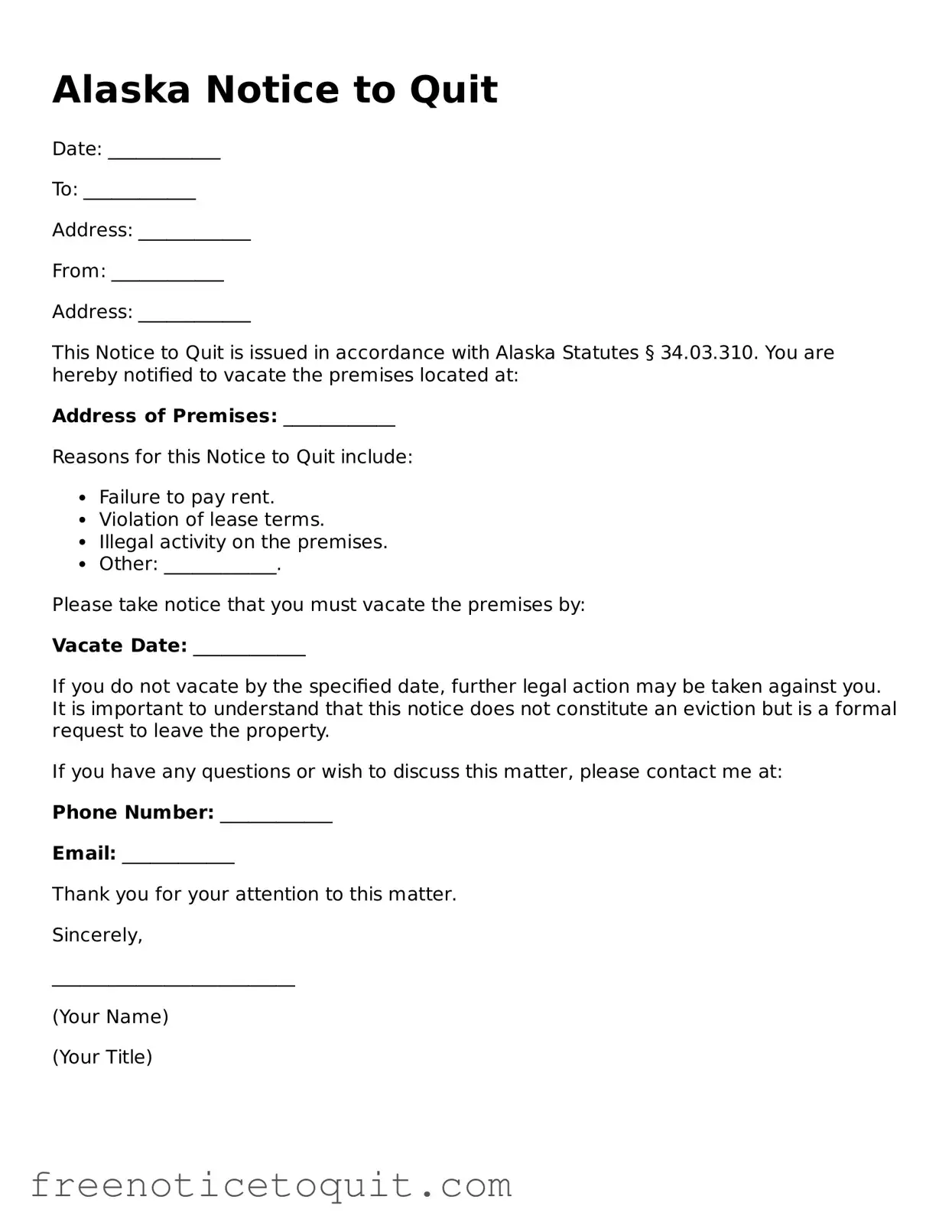
What is an Alaska Notice to Quit form?
The Alaska Notice to Quit form is a legal document that a landlord uses to inform a tenant that they must vacate the rental property. This notice typically serves as a formal request to leave the premises due to specific reasons, such as non-payment of rent or violation of lease terms. It outlines the timeframe in which the tenant must respond or leave the property.
When should a landlord use a Notice to Quit?
A landlord should use a Notice to Quit when they have valid reasons to terminate the tenancy. Common reasons include failure to pay rent, lease violations, or illegal activities on the property. The notice must be delivered according to state laws, and it is essential to follow the correct procedures to ensure the notice is legally binding.
How much notice must a landlord give a tenant?
The amount of notice required can vary depending on the reason for the eviction. For non-payment of rent, landlords typically must give a 14-day notice. For lease violations, the notice period may be shorter, often around 10 days. It is important for landlords to check current Alaska laws to ensure compliance with notice requirements.
Can a tenant contest a Notice to Quit?
Yes, a tenant can contest a Notice to Quit. If a tenant believes the notice is unjust or that they have rectified the issue, they can respond to the landlord. In some cases, tenants may also choose to seek legal advice or assistance from local housing authorities. It is crucial for tenants to act promptly and understand their rights.
What happens if a tenant does not comply with the Notice to Quit?
If a tenant does not comply with the Notice to Quit within the specified timeframe, the landlord may proceed with eviction proceedings. This process typically involves filing a lawsuit in court. Tenants facing eviction should seek legal assistance to understand their options and rights during this process.
Is a Notice to Quit the same as an eviction notice?
A Notice to Quit is not exactly the same as an eviction notice, but it is often the first step in the eviction process. The Notice to Quit informs the tenant of the landlord's intent to terminate the tenancy. If the tenant does not respond or vacate, the landlord may then file for eviction in court. Understanding this distinction is important for both landlords and tenants.